
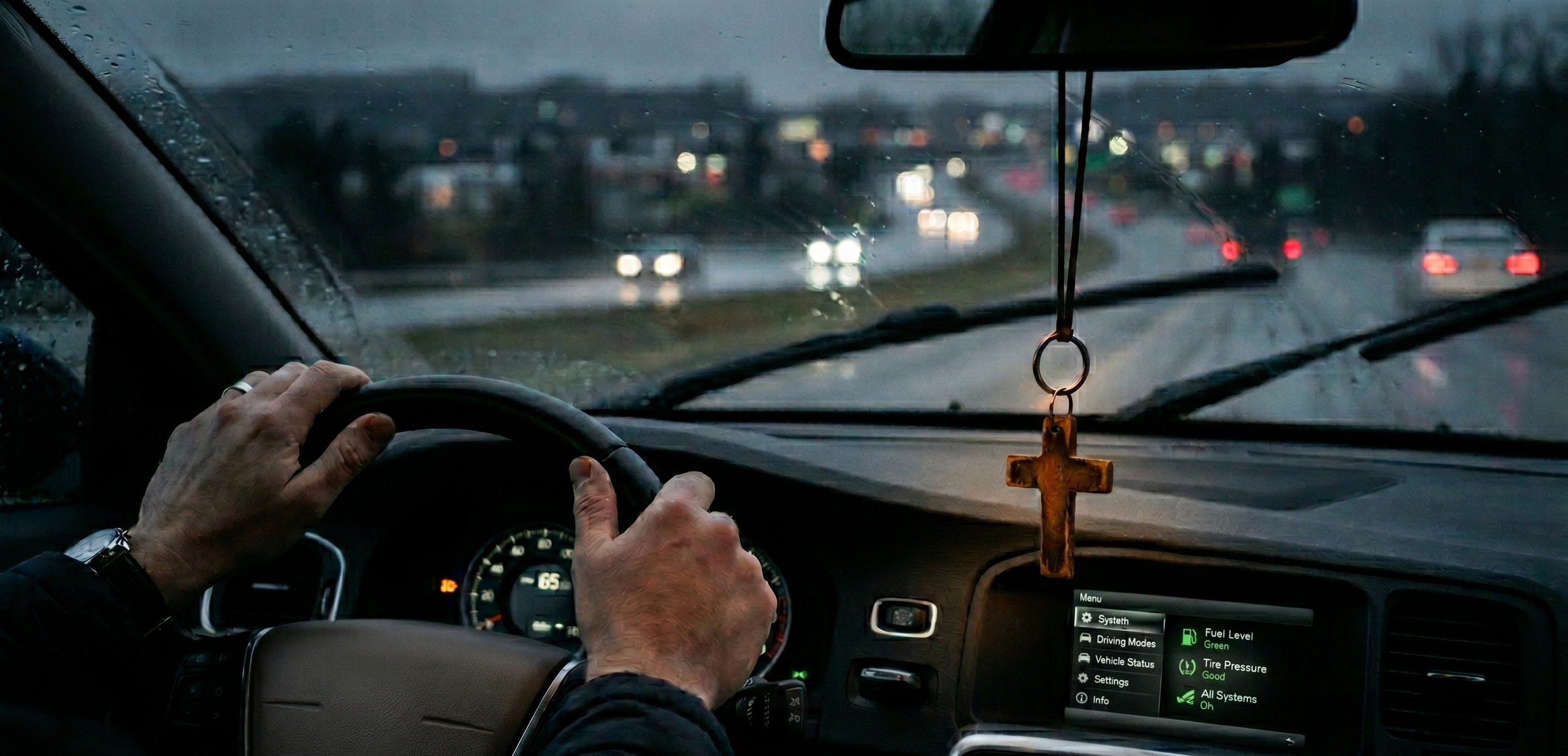
I’ve spent the last two weeks in a state of constant, low-grade dread, and it all started with a dashboard light. My car stalled out on me in the middle of everything, and there is a specific kind of vulnerability that hits you when your two-ton piece of machinery just stops. You feel exposed. You feel stuck. I had to deal with the tow trucks, the back-and-forth with the shop, and that long, quiet walk of shame away from a dead engine.
They told me it was fixed. They replaced the part, handed me the keys, and sent me on my way. But I’ll be honest—I’m scared to drive it. Every time I turn the key, I’m waiting for that shudder. Every time I slow down for a red light, I find myself in a state of braced tension, just waiting for the failure to happen again. I’m physically driving a repaired car, but mentally, I’m still standing on the side of the road waiting for the tow truck.
It is exhausting to live in that kind of hyper-vigilance. And it’s exactly why the words of John 14 hit so differently this week.
Jesus starts this passage by saying, "Do not let your hearts be troubled." When I read that while worrying about a stalling engine, it felt almost impossible. But look at the context: Jesus was telling His friends that He was leaving. Their entire world was about to stall. Everything they had built their lives on for three years was about to go dark on a hill called Calvary. He knew they were going to feel exposed, stuck, and terrified.
Thomas, who is basically my spirit animal when I’m stressed, blurts out exactly what I feel when I’m staring at my dashboard: "Lord, we do not know where you are going; how can we know the way?"
Thomas wanted a map. I wanted a mechanical guarantee that my car wouldn't stall again. We both wanted a destination where we could finally feel safe. But Jesus doesn't give a map or a warranty. He says, "I am the way."
This is the moment where we have to stop trying to fix our feelings and start refocusing on Jesus. Often, we treat mindfulness like a self-help tool—something we do to find our own "center." But that’s not enough when the car is shaking or the bank account is empty. We don’t need a center; we need a Savior. Refocusing on Jesus is the quiet, radical decision to be more aware of His presence than we are of our own fears. It’s not about finding "inner peace"; it’s about turning our gaze toward the Prince of Peace who is already standing there.
We spend so much time trying to fix the vessels of our lives—our careers, our bank accounts, our cars, our health—thinking that if we just get them running perfectly, we can finally give God the glory. But the truth is, God is glorified when we acknowledge Him in the middle of the breakdown. Peace isn't the absence of a stalling engine; peace is the presence of the One who walks with you while you’re waiting for the tow truck.
If Jesus is the Way, then the destination isn't some future point where everything is finally fixed. The destination is Him, right here, in the middle of the anxiety. Refocusing on Him doesn't mean the car won't stall again; it means realizing that even if it does, the Way is still under your feet. You aren't lost just because you're stationary.
We glorify God first because He is God, regardless of our circumstances. We glorify Him because He is the "dwelling place" He promised us. He isn't a mechanic who just fixes our problems and sends us back into traffic alone; He is the passenger who stays when the engine dies.
So today, if you’re gripping the steering wheel of your life with that exhausting, braced tension, waiting for the next thing to break, just stop. Take a breath. Stop looking for a way out and start refocusing on the Way who is in it with you. Give Him the glory for the strength to just sit in the quiet for a moment.
The car might stall, the plan might fail, and the road might get dark—but the Way is Jesus, and He’s not going anywhere. Close your eyes for three seconds. He is here. That is where your hope begins.